
Filter
Sort by:
DTF For Hats

DTF For Hats
DTF for hats gives decorators, businesses, brands, teams, and creators a practical way to prepare custom graphics for compatible headwear. Direct-to-Film transfers can support logos, lettering, illustrations, and other artwork that is applied using controlled heat and pressure.
Hat decoration requires additional planning because curved surfaces, seams, panels, structure, and material can affect placement and application. Start with the actual hat before deciding on artwork dimensions or transfer placement.
What Is DTF for Hats?
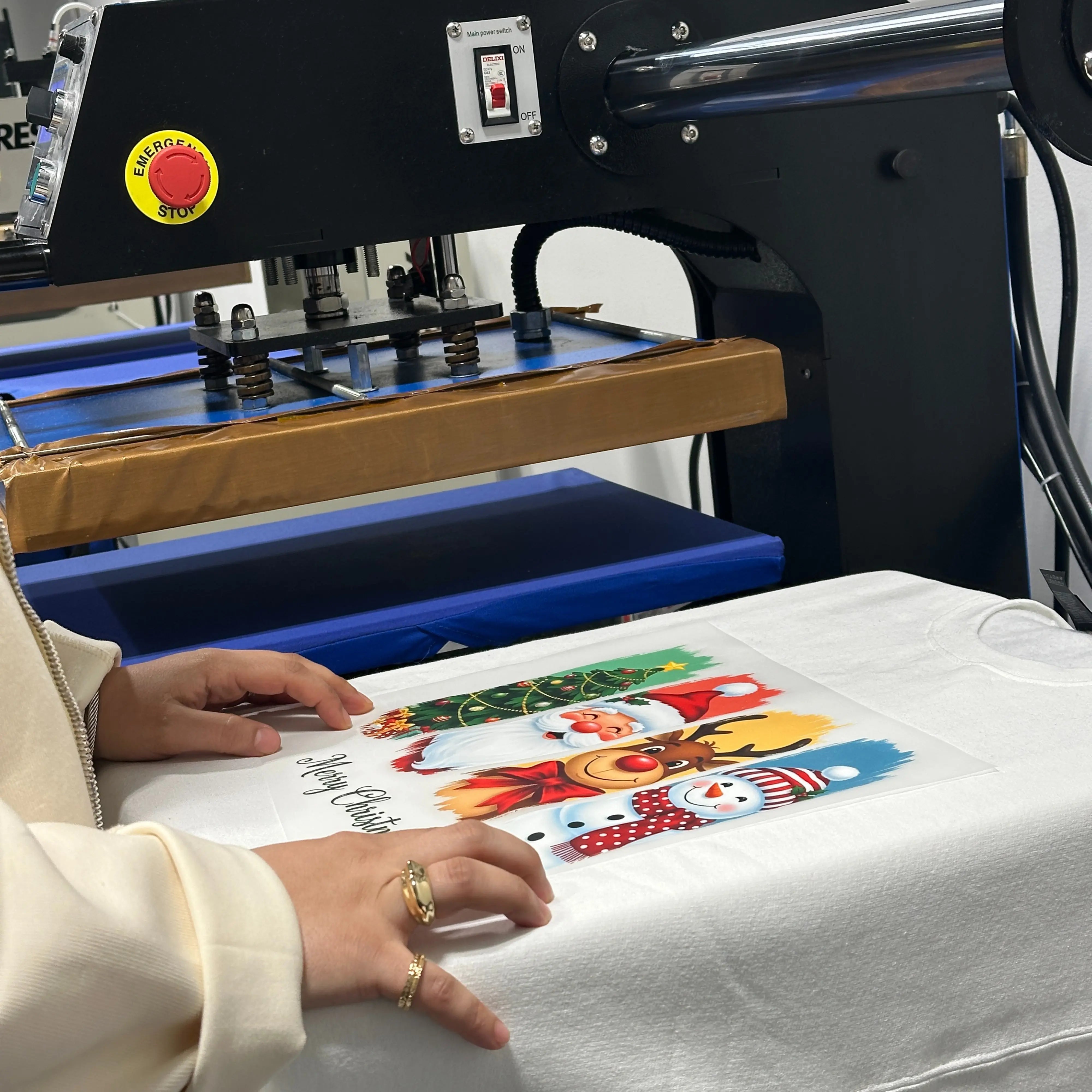
DTF, or Direct to Film, is a garment-decoration method in which artwork is printed onto specialized transfer film and prepared for application to compatible textiles using controlled heat and pressure.
For hats, the basic transfer process remains similar to other apparel applications, but the available decoration area and garment construction require more careful planning.
For artwork prepared specifically for apparel decoration, explore custom DTF transfers.
What Types of Hat Projects Can Use DTF Transfers?
DTF transfers can support different custom headwear projects when the hat material, construction, and application area are compatible with the transfer process.
- Business logos
- Brand graphics
- Team artwork
- Event designs
- Custom lettering
- Merchandise graphics
- Other authorized artwork prepared for compatible headwear
Choose the Hat Before Finalizing the Transfer
Not every hat provides the same application surface. Before preparing artwork, inspect the actual hat and identify where the transfer will be positioned.
Consider:
- Material: Confirm that the hat material is suitable for the intended transfer application.
- Panel shape: Structured or curved panels can affect how evenly the application area can be pressed.
- Seams: Avoid placing important artwork details directly over difficult seams when possible.
- Available area: Measure the usable decoration space before setting transfer dimensions.
- Design proportions: Make sure the artwork fits naturally within the intended panel.
Prepare Artwork for Hat DTF Transfers
Artwork designed for a large shirt print may not work well when reduced to the smaller decoration area of a hat. Review the design at its intended finished size before ordering.
Pay particular attention to:
- Small text
- Fine lines
- Closely spaced design elements
- Overall artwork proportions
- The relationship between the design and the available hat panel
If the same artwork will also be used on shirts, hoodies, or other garments, prepare each transfer around its specific application area rather than using one universal size.
Use DTF Gang Sheets for Multiple Hat Designs
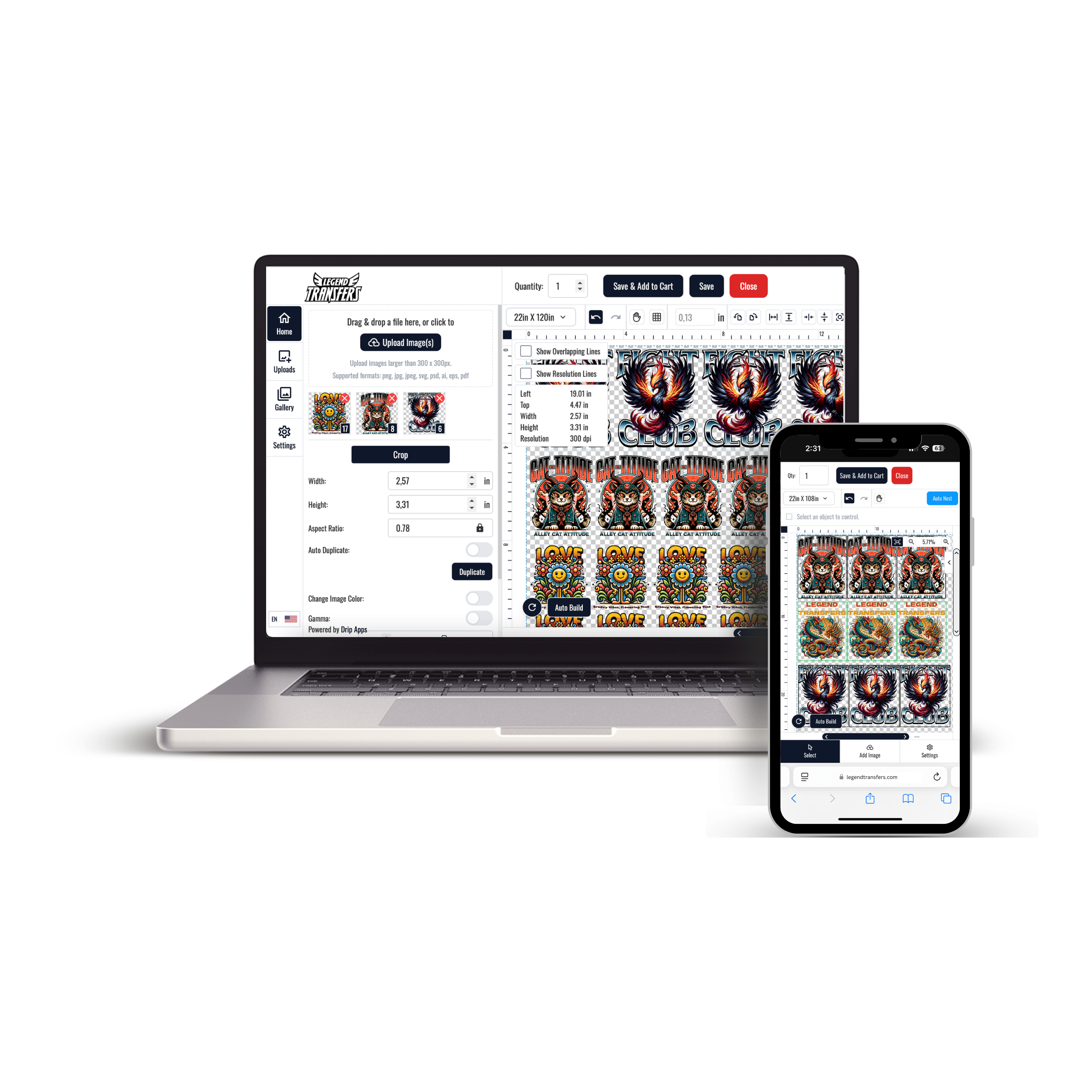
Businesses and decorators producing several hat designs may want to organize multiple transfers within one gang sheet layout.
A gang sheet can include:
- Repeated copies of the same logo
- Different brand graphics
- Team or event designs
- Several artwork variations
- Different transfer dimensions
Explore DTF gang sheets when grouping multiple designs fits your production workflow.
How to Plan DTF Transfer Application on Hats
Applying a DTF transfer to a hat requires careful control of placement, heat, pressure, and support across the intended decoration area.
- Check compatibility: Confirm that the hat material and application area are suitable for the transfer.
- Measure the decoration area: Determine the usable width and height before finalizing the design.
- Position the artwork: Align the transfer carefully within the intended hat panel.
- Follow the applicable instructions: Use the requirements provided for the transfer and garment combination.
- Complete the peel process: Follow the appropriate peel procedure for the transfer being used.
- Inspect the first result: Check the first completed hat before continuing through a larger production run.
Do not assume that every hat or transfer requires identical temperature, pressure, pressing time, or peel conditions. Review the relevant DTF transfer instructions before application.
DTF for Hats vs. Other Decoration Methods
DTF, embroidery, and screen printing use different production workflows. The appropriate method depends on the artwork, hat construction, quantity, desired appearance, and available equipment.
DTF vs. Embroidery
Embroidery creates artwork with thread, while DTF uses a printed transfer. These methods produce different visual and production characteristics, so detailed graphics and thread-based designs should be planned differently.
DTF vs. Screen Printing
Screen printing and DTF also use different preparation and application processes. DTF allows digitally prepared artwork to be produced as a transfer before the final garment application.
Select the decoration method according to the specific hat, artwork, quantity, and production workflow rather than assuming one method is always better.
DTF Hat Projects for Businesses and Brands
Compatible headwear can be incorporated into different custom apparel programs.
- Business and employee apparel
- Brand merchandise
- Team and organization headwear
- Event merchandise
- Creator products
- Promotional apparel
For repeat projects, keep the approved artwork, transfer dimensions, hat specifications, placement details, and quantities organized for future production.
Plan Your DTF Hat Project
- Choose the hat you intend to decorate.
- Confirm that the material and application area are suitable.
- Finalize the artwork.
- Measure the usable decoration area.
- Set the finished transfer dimensions.
- Calculate the required quantity.
- Decide whether individual transfers or a gang sheet fits the project.
- Review the applicable transfer instructions.
- Test the workflow before continuing with a larger run.
Choose DTF Transfers for Your Hat Project
A successful DTF hat project depends on more than the transfer itself. Hat construction, material, artwork dimensions, placement, application requirements, and production planning all affect the workflow.
Start with the hat you intend to decorate, prepare the artwork around the available application area, and choose the transfer format that fits the actual requirements of the project.


